
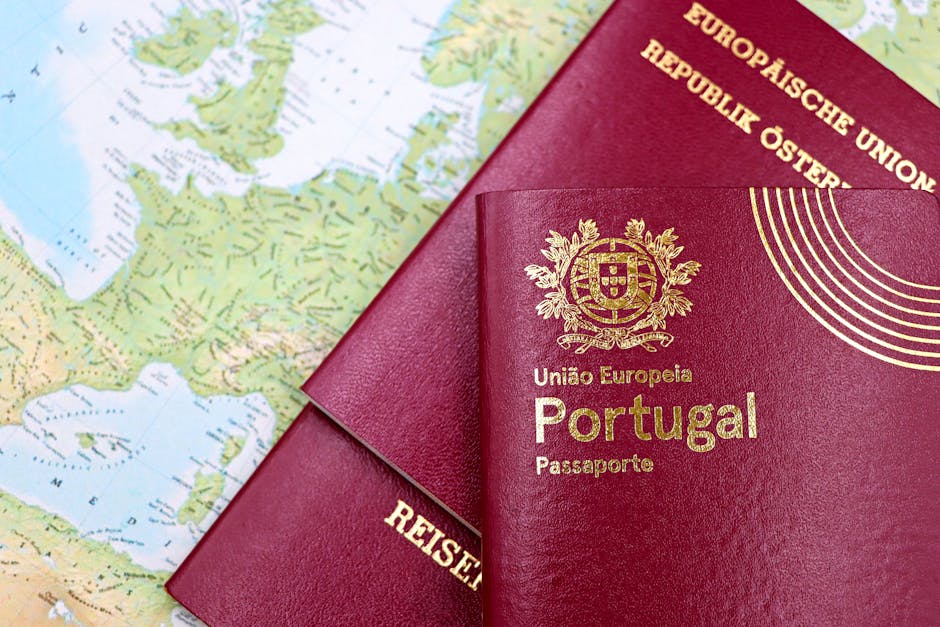
Around 1 in 10 international travelers has been delayed, questioned, or denied entry due to a documentation problem that had nothing to do with their passport. The passport gets remembered. These six documents don’t — until the moment it actually matters.
None of these are exotic edge cases. They show up consistently in trip-ruining scenarios: the rental car desk in Tokyo that won’t hand over the keys, the check-in agent in Hanoi holding up the boarding line, the customs officer in Dubai asking about the pills in your carry-on. The situations are avoidable. The documents are simple to prepare. Most travelers just never get around to it.
The Six Forgotten Documents: What They Are and What Happens Without Them
Here’s the full picture before going deeper on the ones that catch people most often.
| Document | What It Is | When You’ll Be Asked | Consequence of Forgetting |
|---|---|---|---|
| Travel Insurance Card | Policy number, 24-hr emergency line, coverage summary | Hospital admission, airline desk, claim filing | Pay out-of-pocket upfront; hours on hold from abroad |
| International Driving Permit (IDP) | Official multilingual translation of your home license | Car rental desk, police checkpoint abroad | Rental refused; fines; no available workaround |
| E-Visa Printout | Physical copy of your approved digital visa | Airline check-in desk, arrival immigration | Denied boarding or detained at the border |
| Hotel/Accommodation Confirmation | Documented proof of where you’re staying with full address and dates | Border control in Schengen Zone, Japan, Southeast Asia | Extended questioning; possible entry denial |
| Yellow Fever Certificate | WHO-issued Carte Jaune vaccination record on official card | Entry into 40+ countries in Africa and South America | Refused entry; forced vaccination on arrival |
| Prescription Letter | Doctor’s note on clinic letterhead for controlled medications | Customs in Japan, UAE, Singapore, Indonesia | Medication confiscated; possible arrest or fines |
Three rules that apply across all six before diving into the specifics:
- Physical copies beat digital for the e-visa, accommodation confirmation, and prescription letter. Not every border agent accepts a phone screen — and your phone will have the worst battery life of its entire existence exactly when you need it most.
- Check entry requirements at the official embassy website of your destination, not travel forums or airline help pages. Rules change without notice, and official sources are updated first.
- Pack a second set of copies in your checked luggage, separate from your carry-on. If one bag goes missing, you still have the documents.
Your Travel Insurance Card Is Worthless Without the Right Details on It
You bought the insurance. Most people stop there and assume everything is handled.
The moment you actually need it — a hospital in Lisbon, a canceled connection in Seoul, a stolen bag in Buenos Aires — is not the moment you want to be hunting through email threads for a policy number. You need a physical card or a pre-saved offline document with the correct information, ready without WiFi.
Allianz Travel, World Nomads, and IMG Global all issue downloadable policy summary cards when you purchase coverage. If yours doesn’t come with one automatically, open your confirmation PDF and pull out these four things:
- Your policy number
- The 24-hour emergency assistance line — not the general customer service number, which is different
- Your coverage dates
- Your coverage type, specifically whether emergency medical evacuation is included
Hospitals in Thailand, Indonesia, and across much of Latin America require proof of evacuation coverage before scheduling non-emergency treatment. Without it, you pay upfront and claim later — which can put several thousand dollars on your credit card before your insurer gets involved. Some hospitals in these regions will not even begin the admissions paperwork until coverage is confirmed.
What Your Insurer Actually Needs When You Call from Abroad
The emergency assistance line is not the same as the general customer service number. One has specialists who coordinate directly with hospitals, arrange direct billing, and can dispatch medical evacuation if needed. The other puts you on hold for 40 minutes.
For World Nomads, the emergency line appears on your certificate under the “Emergency Assistance” section — not the standard contact. For Allianz Travel, it’s the region-specific number on the back of the wallet card. Write it on a separate card. Keep it independent of your passport in case one gets lost or stolen.
When you call from abroad, have ready: your policy number, your current location, the name and address of the hospital or clinic, and a brief description of what happened. That’s all the agent needs to start working on your behalf.
The Four-Minute Prep Routine That Covers Every Trip
Before each trip, open Google Docs or Apple Notes and create a document called “[Destination] Emergency Info.” On it: insurer name, policy number, emergency line number, coverage dates. Below that, the local emergency number for your destination — 112 in most of Europe, 999 in the UK, 110 or 119 in Japan, 911 in North America. Print one copy for your carry-on and one for your checked bag.
Four minutes. Every trip.
Keeping Documents Accessible Without a Signal
Three options that consistently work offline:
- Google Drive: Tap the three-dot menu on any file in the mobile app and select “Make available offline.” Downloads the full PDF to your device.
- iPhone Files app: Save PDFs to “On My iPhone” storage, not iCloud. They load without any connection.
- Printed copies: Still the most reliable option by a significant margin. No battery, no signal, no problem. Fits in a shirt pocket. Can be photocopied anywhere in the world for almost nothing.
The International Driving Permit — One Rule, No Exceptions
You cannot get an International Driving Permit after you leave your home country. In the US, AAA issues them for $20 — apply in person or by mail with your passport photo and valid driver’s license, and allow a few business days for processing. In the UK, it’s the Post Office for £5.50. In Australia, contact your state auto club: NRMA in New South Wales, RACQ in Queensland, RACV in Victoria.
Over 150 countries require an IDP for foreign drivers. Italy, Japan, Thailand, and the UAE are where travelers get caught most often. Hertz, Sixt, and Budget enforce the requirement at rental desks in these countries — no IDP, no car, no refund. There is no substitute document, no workaround at the counter, and no way to get one once you’ve landed. Order it before you fly, two weeks minimum before departure.
E-Visa Printouts and Accommodation Proof Border Agents Actually Check
These two get dismissed as formalities. They get people turned back from flights every year.
The E-Visa Print Requirement That Surprises Travelers Every Year
Getting approved for a visa online does not mean you travel without paper. India’s e-Tourist Visa, Vietnam’s e-visa approval letter, and Kenya’s Electronic Travel Authorization all require you to present a printed physical copy — either at the airline check-in desk or at the immigration counter on arrival. The visa exists in the system. They still want to see the paper.
Without one, the check-in agent won’t board you. Or immigration will pull you into a secondary processing lane that can take hours, entirely at the officer’s discretion, while your travel companions wait on the other side of the gate.
The rule is simple: if you applied for any visa online, print the full approval letter before leaving home. Two copies. This takes 90 seconds and costs essentially nothing.
What Counts as Acceptable Proof of Accommodation
Border agents in the Schengen Zone, Japan, Morocco, and several Gulf states will ask where you’re staying on your first night. A hotel name is not sufficient. They want a full address, booking dates, and a confirmation number — ideally all on one printed document.
What works:
- Hotel booking confirmation from Booking.com, Hotels.com, or direct — must show the full property address and check-in/check-out dates
- Airbnb confirmation with the host’s complete address listed (sent automatically after a booking is confirmed)
- Invitation letter from a host for travelers staying with friends or family — in Morocco and some Gulf countries, this letter must include the host’s national ID number and may need to be notarized by a local authority
What doesn’t work: a hotel name you remember off the top of your head, a screenshot of a map pin, or a verbal description of the neighborhood. If you’re traveling to multiple destinations and haven’t booked every night in advance, at minimum have the first night fully confirmed and documented. Border officers are checking that you have a concrete plan — not that every night of your trip is pre-arranged.
Health Documents That Change by Destination
Do I Need a Yellow Fever Certificate?
If you’re traveling to Ghana, Nigeria, Kenya, Uganda, Brazil, Peru, or Colombia — probably yes. Over 40 countries in sub-Saharan Africa and South America require a valid Yellow Fever vaccination certificate for entry. Some require it regardless of your origin; others require it only if you’re arriving from a country where yellow fever transmission is documented.
The certificate is a specific physical card — the International Certificate of Vaccination, formally called the Carte Jaune — issued by the clinic that administered the vaccine. A screenshot won’t substitute at most border crossings. The WHO now considers the vaccine to confer lifetime immunity, but some countries’ border systems still show a 10-year validity period. If your card is old, check the current specific entry rule for your destination before assuming it still qualifies.
Travel health clinics often require an appointment booked in advance, and the vaccine needs at least 10 days to become effective. This is not a document to leave until the week before departure.
Can I Bring My Prescription Medications?
Japan, Singapore, the UAE, and Indonesia classify many common Western medications as controlled substances. Adderall is illegal to bring into Japan entirely. Sleep aids containing zolpidem are restricted in the UAE. Codeine-containing painkillers are tightly controlled across Southeast Asia. Carrying these without the right documentation can result in confiscation, detention, or worse.
What you need: a letter from your prescribing doctor on clinic letterhead, stating your full name, the medication name, dosage, quantity you’re carrying, and the clinical reason for the prescription. Japan additionally requires a formal import certificate called a Yunyu Kakunin-sho for certain substances — this must be applied for weeks in advance through the Japanese embassy or consulate in your home country.
The only reliable source for current rules is the embassy website of your destination country, in the consular information or customs section. Not travel blogs. Not Reddit threads. Requirements update frequently and vary by the specific medication.
Are There Other Health Entry Requirements Worth Knowing?
Cuba and Ecuador both require travelers to carry health insurance that covers medical treatment within the country. Standard domestic health plans — including most US employer plans and many travel insurance add-ons — typically do not qualify. Both countries have denied entry to travelers at the border without valid coverage documentation.
For live, country-specific requirements including outbreak-related travel restrictions, IATA’s Travel Centre pulls real-time data and is the same database airlines reference when training their check-in staff. It’s publicly accessible and free to use. If you want one bookmark for entry requirements research, that’s the one.
The document that ruins the most trips isn’t the passport — it’s the small one you decided not to print.