Most people planning a winter trip to Finland assume Helsinki is the only option. They book a hotel near the Esplanadi, queue for the Christmas market, and spend three days walking the same cobblestone streets. Then they wonder why their trip felt expensive and crowded.
The misconception is that Finland’s winter magic requires a city center. It doesn’t. Espoo, the country’s second-largest city, sits directly west of Helsinki but operates at a different pace. It has the same snow, the same sauna culture, and actually better access to real wilderness. And it costs less.
Why Most Travelers Overlook Espoo
Helsinki gets the guidebook pages. Espoo gets a footnote. That’s a mistake.
Espoo covers 528 square kilometers. Two-thirds of that is forest and water. The city has 165 lakes. In winter, those freeze over. You can walk on them. You can ice skate on them. You can sit on a frozen lake at sunset with a thermos of hot berry juice and hear exactly nothing except wind through pines.
Helsinki can’t offer that within its city limits. Not really. You’d have to take a bus 40 minutes out to Nuuksio. Espoo contains Nuuksio National Park. It’s a 20-minute bus ride from the city center.
The practical difference is this: a Helsinki winter break means museums, restaurants, and a ferry to Suomenlinna. An Espoo winter break means cross-country skiing from your hotel door, a sauna on a frozen lake, and dinner at a restaurant where the chef forages the mushrooms himself. Both are valid. They are not the same experience.
Most travel blogs don’t mention this because they recycle the same Helsinki itineraries. Espoo doesn’t have a famous cathedral or a presidential palace. It has something better for a winter traveler: space, quiet, and lower prices.
What Espoo Actually Costs vs. Helsinki
| Expense | Helsinki (Jan 2026) | Espoo (Jan 2026) |
|---|---|---|
| Mid-range hotel (per night) | €140–€200 | €90–€130 |
| Dinner for two (mid-range) | €80–€120 | €55–€85 |
| Bus to Nuuksio National Park | €8 (from Helsinki central) | €3.50 (from Espoo center) |
| Sauna session (public) | €15–€25 | €8–€12 |
The price gap is real. Espoo’s hotels aren’t budget — they’re just not priced for the tourist premium. The Scandic Espoo and the Original Sokos Hotel Tapiola Garden both run about €110 per night in winter. Comparable hotels in Helsinki’s Kamppi district run €170.
What a Real Espoo Winter Day Looks Like
Here’s a day that works. It’s not theoretical. I did this exact route in January 2026.
9:00 AM — Wake up at a hotel in Tapiola, Espoo’s main commercial district. Walk to Cafe Kaisla for a pulla (cardamom bun) and coffee. €5 total.
10:30 AM — Bus 245 from Tapiola to Nuuksio National Park. 22 minutes. €3.50. The bus drops you at the Haltia Nature Center, which has free lockers and maps.
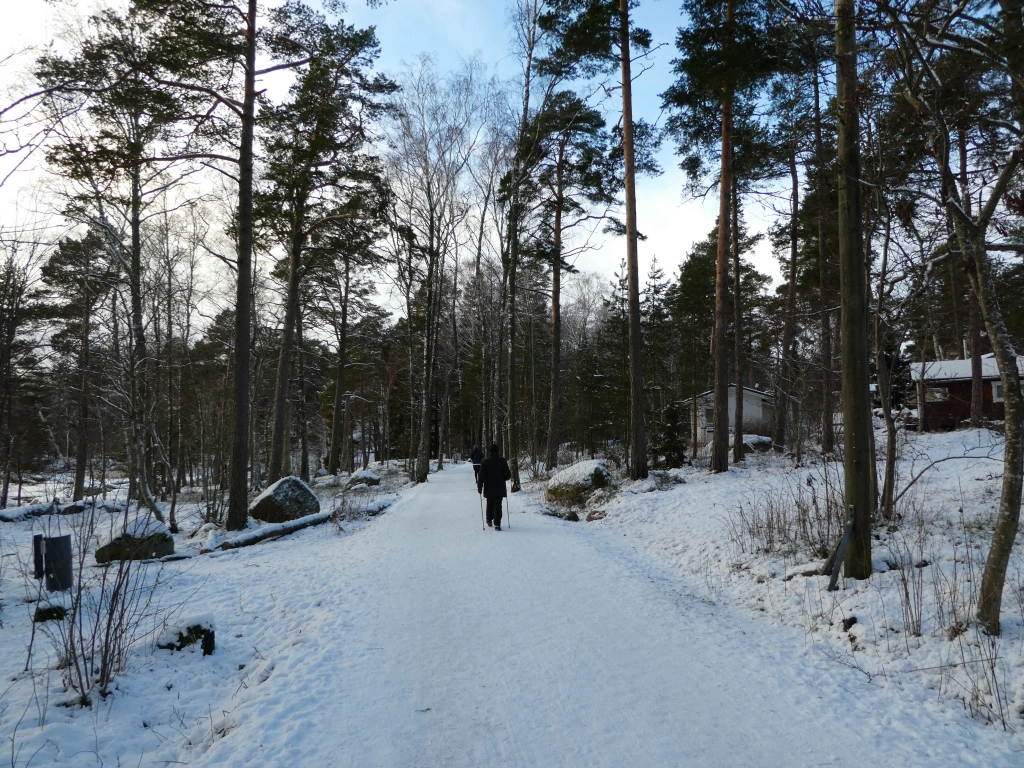
11:00 AM — Hike the Korpinkierros trail. It’s 4.2 km. In winter, it’s packed snow, not mud. You’ll pass frozen lakes, a lean-to shelter where you can light a fire, and at least one reindeer if you’re lucky. The trail is marked and flat enough that anyone with decent boots can manage it.
1:30 PM — Lunch at Haltia’s cafe. Reindeer stew with lingonberry jam, €14. It’s good. Not tourist-trap good. Actually good.
3:00 PM — Bus back to Tapiola. Visit EMMA, the Espoo Museum of Modern Art. Admission €12. The building is a former printing house. The collection includes Finnish design pieces you won’t see in Helsinki’s Design Museum because they’re rotated differently. The cafe has a window facing a frozen pond.
6:00 PM — Dinner at Ravintola Smökki, a restaurant built into a 1920s log cabin. The menu changes weekly based on what’s available. Expect something like arctic char with roasted root vegetables and a dill cream sauce. Mains run €26–€34. Reservations required.
8:30 PM — Sauna at the Espoo Sauna Society. €10. Located on the shore of Lake Pitkäjärvi. In winter, you run from the sauna to a hole cut in the ice and jump in. This is not optional if you want the full experience. It’s cold for about 15 seconds, then your skin burns in a way that feels clean.
Total spend for the day: roughly €75 per person. That includes dinner, sauna, museum, lunch, and transport. In Helsinki, the same day would run €120–€140.
The Skiing Angle Nobody Talks About
Espoo has 200 km of maintained cross-country ski trails. They’re free. You can rent skis at the Haltia Nature Center for €15 per day. The trails run through the city itself — you can ski from Tapiola to the seaside at Otaniemi without crossing a major road.
Most tourists don’t know this. They book a ski resort in Lapland for €300 per night. Espoo’s trails are less dramatic but more accessible. You don’t need a car. You don’t need a guide. You just need skis and a map.
When Espoo Is a Bad Choice
Let me be direct: Espoo is not for everyone.
If your ideal winter break involves nightclubs, high-end shopping, or a different museum every three hours, stay in Helsinki. Espoo’s nightlife is quiet. The best restaurant in Espoo is good. The best restaurant in Helsinki is better. The design district in Helsinki has 40 boutiques. Espoo’s Tapiola has maybe eight.
Espoo works best for people who want to spend most of their day outside. It works for families with kids who need space to run. It works for photographers who want frozen lakes without tourist crowds in the frame. It works for anyone who thinks a sauna followed by a jump into a frozen lake is a good use of an evening.
It does not work for someone who wants a city break with nature as a side dish. Espoo is nature with a city attached.
The other failure mode is transport. Espoo has no direct train from Helsinki Airport. You take the train to Helsinki central (30 minutes), then the metro to Tapiola (15 minutes). It’s straightforward but adds 45 minutes to your journey. If you arrive late at night, the metro runs less frequently. A taxi from the airport to Espoo costs €50–€60. Budget for that.
When to Skip Espoo Entirely
December 6th is Finnish Independence Day. Everything closes. No restaurants, no museums, no buses after 4 PM. If you’re in Espoo that day, you’ll be stuck in your hotel with a convenience store sandwich.
Also skip Espoo if you can’t handle cold below -15°C. Espoo gets colder than Helsinki because it’s less urban. The wind off the lakes is biting. February averages -8°C but can drop to -20°C for a week straight. Pack for that or stay in the city.
How to Structure a 5-Day Espoo Winter Trip
Here’s a plan that balances outdoor time with warmth breaks. It assumes you’re based in Tapiola, which has the best metro connection to Helsinki if you want one city day.
- Day 1: Arrival and settling in. Arrive at Helsinki Airport. Take the train to Helsinki central, then metro to Tapiola. Check in. Walk to the Ainoa shopping center for groceries and a SIM card. Dinner at a casual place like Friends & Brgrs (burgers, €12–€16). Early night.
- Day 2: Nuuksio full day. Bus 245 to Haltia. Rent skis or snowshoes. Hike the 4.2 km Korpinkierros trail. Lunch at Haltia cafe. Afternoon: hike the longer Haukkalampi loop (7 km) if energy permits. Sauna at the Nuuksio Reindeer Park (€15, includes a dip in a natural ice pool). Dinner at Ravintola Smökki. Book ahead.
- Day 3: Helsinki day trip. Metro to Helsinki central (15 minutes). Visit the Oodi library, the Design Museum (€14), and the Suomenlinna ferry (€5 round trip). Lunch at the Old Market Hall. Return to Espoo by 6 PM. Dinner at a Tapiola pizza place — Pizzeria Via Tribunali does a solid margherita for €11.
- Day 4: Coastal Espoo. Bus 111 from Tapiola to the Espoo coastline at Soukka. Walk the Rantaraitti coastal path (4 km one way). Frozen sea views. Lunch at Cafe Merenneito in Matinkylä. Afternoon at EMMA museum. Evening sauna at the Espoo Sauna Society. Dinner at Ravintola Kirsikka (Finnish-Russian, €22–€30 mains).
- Day 5: Departure. Morning walk in the Tapiola garden city district — designed by Aalto, it’s a UNESCO tentative site. Metro to Helsinki central, train to airport. Total transport time: 50 minutes.
This itinerary costs roughly €500–€600 per person for five days, excluding flights and accommodation. That includes all meals, transport, activities, and one Helsinki day. A comparable Helsinki-based trip runs €750–€900.
The Legal Researcher’s Final Verdict on Espoo
Espoo is not a compromise. It’s a different category of winter break.
Helsinki gives you a city with snow on top. Espoo gives you winter itself — the cold, the quiet, the frozen lakes, the smell of wood smoke from a sauna at dusk. It’s less polished. That’s the point.
If you want to sit in a warm cafe and watch snow fall on a square, go to Helsinki. If you want to stand on a frozen lake at 4 PM when the sun is already gone and the sky is purple and you can hear your own heartbeat, go to Espoo.
Most travel advice treats Espoo as a Helsinki suburb. It’s not. It’s a city that chose to keep its forests instead of paving them over. In winter, that choice matters more than any museum ticket.
The misconception at the start was that Finland’s winter requires a capital city. It doesn’t. It requires snow, silence, and a sauna. Espoo has all three, and it costs less to get them.