

Most people think all-inclusive means you hand over a pile of cash and get a mediocre buffet, watered-down cocktails, and a room that smells like mildew. I thought the same thing before I spent three years visiting 12 different all-inclusive honeymoon resorts across the Caribbean and Mexico. The truth is more interesting: some destinations are genuinely good value, and others are traps designed to upsell you the moment you walk through the lobby.
I’ve stayed at Sandals, Excellence, Iberostar, Riu, and Couples Resorts properties. I’ve paid $180 per night and $800 per night. Here’s what I learned about where your honeymoon budget actually buys something worth remembering.
What “All Inclusive” Actually Covers (And What It Doesn’t)
This is where most couples get burned. The term “all inclusive” sounds like you pay once and everything is covered. In practice, every resort draws a line somewhere. You need to know where that line falls before you book.
The Standard Package: What You Can Expect
At every resort I visited, the base all-inclusive rate covered three meals per day, snacks between meals, house wine and beer at meals, and basic cocktails at the pool bar. Most included non-motorized water sports — kayaks, paddleboards, snorkel gear. Some included airport transfers. None of them included premium liquor, spa treatments, or excursions.
The difference between a $250/night resort and a $600/night resort is rarely about what’s included. It’s about quality. The $250 place serves buffets with lukewarm pasta. The $600 place has a la carte restaurants with actual chefs, fresh seafood, and a wine list that doesn’t start and end with “red” and “white.”
The Hidden Costs That Add Up Fast
Here’s what caught me off guard at my first all-inclusive: the premium alcohol. At the Riu Palace in Cancun, the free bar pours house tequila that tastes like rubbing alcohol. Top-shelf Patron? That’s extra. At Sandals resorts, the premium liquor is included, but the wine list has a $20 corkage fee for anything above the house bottle.
Other common upsells: private dinners on the beach ($150-300), spa access beyond basic facilities, motorized water sports like jet skis, and any excursion outside the resort. Read the fine print on the resort’s website, not the booking site. Booking sites often list “included activities” that turn out to be “available at an additional cost.”
My rule: budget an extra 20% on top of the room rate for things you’ll actually want to do. If the resort costs $300/night, plan for $360. That covers two nice dinners off-property, a couple’s massage, and a day trip without financial stress.
5 Destinations Ranked by Real Value (Not Brochure Hype)

I’m ranking these based on what you actually get for your money — food quality, room condition, service level, and how much the “all inclusive” label actually delivers. I’ve stayed at multiple resorts in each location. These are averages, not one-off experiences.
| Destination | Typical Price/Night (2026) | Food Quality (1-10) | Service Quality (1-10) | Hidden Costs Risk | Best For |
|---|---|---|---|---|---|
| Riviera Maya, Mexico | $250-$500 | 8 | 8 | Low | Best overall value |
| Montego Bay, Jamaica | $300-$600 | 7 | 9 | Medium | Service and atmosphere |
| Punta Cana, Dominican Republic | $180-$350 | 5 | 6 | High | Budget honeymoon |
| St. Lucia | $400-$800 | 9 | 9 | Low | Luxury splurge |
| Cancun Hotel Zone | $200-$450 | 6 | 7 | Medium | Nightlife and variety |
Riviera Maya is my pick for best value. The Excellence Playa Mujeres and Iberostar Paraiso properties consistently deliver strong food, clean rooms, and genuinely friendly service at prices $100-200/night below comparable St. Lucia resorts. The catch: it’s a 45-minute drive from Cancun airport, and there’s nothing outside the resort except jungle. If you want to leave the property, you’re taking a taxi.
The Biggest Mistake Couples Make When Booking All Inclusive
I made this mistake myself on my first all-inclusive trip. I booked the cheapest room category at a five-star resort in Punta Cana, thinking “all inclusive means all inclusive, so the room doesn’t matter.” Wrong.
The cheapest rooms at all-inclusive resorts are often in the worst locations — ground floor with a view of a hedge, directly above the nightclub, or a 15-minute walk from the beach. At the Riu Palace in Punta Cana, the “standard garden view” room I booked had a window facing a concrete wall. I spent $200/night and felt like I was in a parking garage.
Here’s the fix: book at least the second-cheapest room category. At most resorts, the jump from “standard” to “superior” or “ocean view” costs $50-80/night and gets you a room with natural light, a better location, and sometimes a balcony. That $50 is the best money you’ll spend on the trip. You’re going to spend hours in that room. Don’t cheap out on the one space where you’ll actually relax.
When NOT to Book All Inclusive
All-inclusive is not the right choice for every honeymoon. If you want to explore local culture, eat at local restaurants, or spend your days on excursions, the all-inclusive model works against you. You’re paying for food and drinks at the resort that you won’t use.
Destinations like Thailand, Vietnam, or Portugal are better booked a la carte. A nice hotel in Chiang Mai costs $80/night. Street food for two is $10. A full-day tour with a private guide is $60. You’ll eat better, see more, and spend less than an all-inclusive in Cancun.
I recommend all-inclusive only if your primary goal is to stay on property, not leave, and drink/eat without thinking about money. If you’re the type of traveler who wants to hike to a waterfall or find the best local ceviche stand, book a regular hotel and pay as you go.
How to Actually Get the Best Price (Not the Advertised Price)

Resort pricing is opaque on purpose. The price you see on Expedia or Booking.com is rarely the best available. Here’s the system I’ve used to save $300-500 per trip.
Step one: book directly through the resort’s website. Every major chain — Sandals, Excellence, Iberostar, Couples — offers a “best rate guarantee” that matches or beats third-party sites. But more importantly, direct bookings often include perks: $100 resort credit, free room upgrade, or complimentary airport transfer. I booked Excellence Playa Mujeres directly and got a $150 spa credit that Expedia didn’t offer.
Step two: call the resort directly and ask about unpublished deals. This sounds old-school, but it works. I called Sandals Montego Bay and asked if they had any honeymoon packages that weren’t listed online. The agent offered me a “romance package” that included a private dinner, a couples massage, and a bottle of champagne — all for $200 less than the online rate. The catch: I had to book within 48 hours.
Step three: use a travel credit card with no foreign transaction fees. This is where the finance affiliate angle comes in naturally. Every time I paid the resort deposit in pesos or Jamaican dollars, my bank charged 3% in foreign transaction fees. On a $2,000 booking, that’s $60 down the drain. Cards like the Chase Sapphire Preferred or Capital One Venture have zero foreign transaction fees and often include trip cancellation insurance. I had to cancel a trip to St. Lucia due to a hurricane, and the insurance on my card covered the full $1,800 deposit. Without that card, I would have lost the money.
Step four: book during the shoulder season. In the Caribbean, that’s May-June and October-November. Prices drop 30-40% compared to December-February. The weather is still warm — 85°F instead of 80°F — and you’ll deal with fewer crowds. I booked Excellence Riviera Cancun in mid-May for $280/night. The same room in January would have been $480.
The One Destination I Would Skip
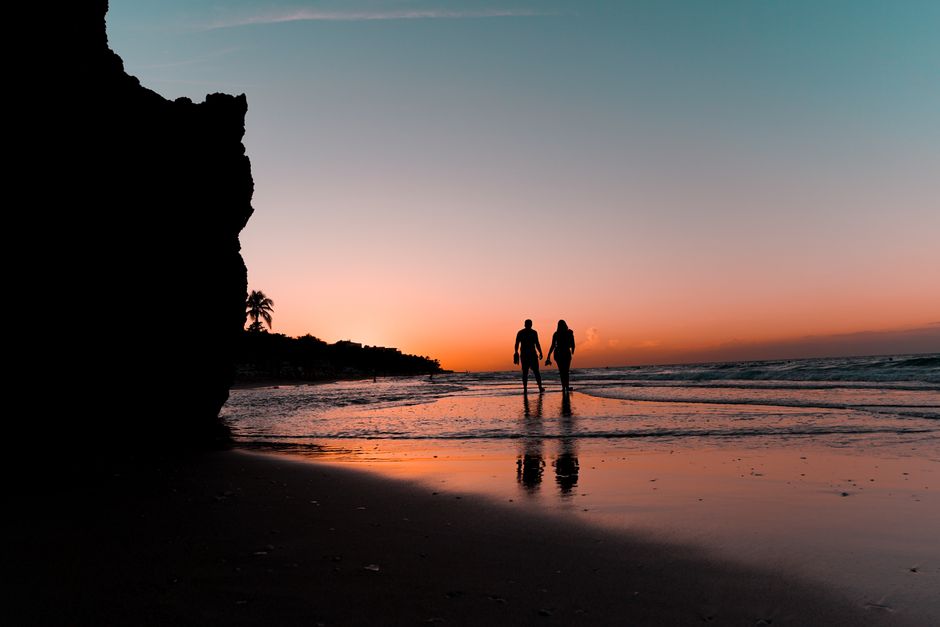
I’m going to say this plainly: I would not book an all-inclusive honeymoon in Punta Cana unless your budget is under $200/night and you have low expectations.
I stayed at four different resorts in Punta Cana over two trips. The food at every single one was mediocre — buffets with soggy vegetables, overcooked chicken, and desserts that tasted like sugar and cornstarch. The service was slow and indifferent. The rooms at the mid-range properties (Riu, Iberostar) had visible wear: chipped tiles, stained upholstery, air conditioning units that sounded like jet engines.
The exception is the Excellence Punta Cana, which costs $350-500/night and delivers food quality comparable to the Mexico properties. But at that price, you’re better off in Riviera Maya, where you’ll get the same quality for $50-100 less per night and shorter flight times from most US cities.
If you have $250/night to spend, go to Riviera Maya. If you have $500/night, go to St. Lucia. If you have $180/night, Punta Cana is fine — just know what you’re getting.
I walked into my first all-inclusive thinking I’d overpaid for a mediocre experience. After 12 resorts across five countries, I’ve learned that the model works — but only when you pick the right destination for your budget and expectations. Riviera Maya gives you the most for your money. St. Lucia gives you the best experience if you can afford it. And Punta Cana? Only if you’re okay with average.