
You have four free days in March, want mild weather and quieter streets, and need to avoid the crowds that arrive when schools close. The planning problem is not simply choosing a pretty route. Australian school calendars differ by state, and Easter can turn an ordinary walking break into a busy travel period. This guide uses 2026 public-school dates for New South Wales, Victoria, Queensland, South Australia, Western Australia and Tasmania. Private-school calendars may differ. No state law is being interpreted here. This is not legal advice — consult a licensed attorney.
When does early autumn fall around Australian school weeks?
The best national window is a Tuesday to Thursday in March, after the school year has settled and before the April holiday rush. Early autumn is not a single Australian travel season in calendar terms. Sydney, Melbourne, Brisbane, Adelaide and Perth begin their first term on slightly different dates, while Hobart runs later. That difference matters if you want a city centre that feels active but not packed.
| City | State public-school Term 1, 2026 | First main school break | Strong walking window |
|---|---|---|---|
| Sydney | 2 February–2 April | 7–17 April | Tuesday–Thursday in March |
| Melbourne | 27 January–2 April | 3–19 April | Tuesday–Thursday in March |
| Brisbane | 27 January–2 April | 3–19 April | Tuesday–Thursday in March |
| Adelaide | 27 January–10 April | 11–26 April | Tuesday–Thursday in March or early April |
| Perth | 2 February–2 April | 3–19 April | Tuesday–Thursday in March |
| Hobart | 5 February–17 April | 18 April–3 May | Tuesday–Thursday in March or early April |
Why Tuesday to Thursday wins
Monday can carry weekend spillover, while Friday is when short breaks begin. Tuesday to Thursday gives you the strongest chance of open galleries, normal public-transport service and fewer leisure groups. Start after the school commute, around 9:30am, then finish before the afternoon peak.
How to verify the dates
Use the official calendars before booking. The NSW Government calendar, Victorian term calendar, Queensland Department of Education dates, South Australian calendar, Western Australian dates and Tasmanian dates all warn, directly or indirectly, that individual schools can add student-free days or vary private-school arrangements.
How should you choose a city walk during term time?

Choose a route with a clear start, a reliable public-transport exit and one indoor fallback. That structure matters more than collecting famous landmarks. A school-week walk should absorb a late breakfast, a short shower or a tired child without collapsing.
- Sydney: Walk Circular Quay, the Royal Botanic Garden, Mrs Macquarie’s Chair and Woolloomooloo. Allow 2.5 to 3 hours for roughly 5 kilometres, with ferries and trains nearby if the weather changes.
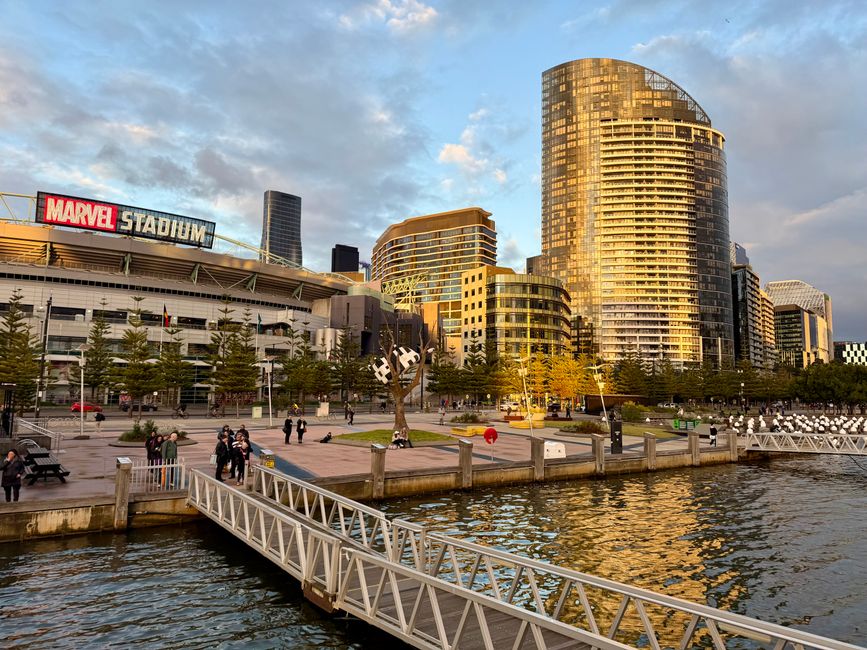
- Melbourne: Start at Federation Square, follow the Yarra to Birrarung Marr, then turn toward Fitzroy Gardens. The route is about 6 kilometres and has cafés, trams and museums close to the centre.
- Brisbane: Link South Bank, the river promenade and West End. Keep the route to 4–5 kilometres and schedule the most exposed section before noon.
- Adelaide: Use the River Torrens path between the Adelaide Festival Centre and the Botanic Garden. It is a calm 5-kilometre route with easy stops along North Terrace.
- Perth: Walk Elizabeth Quay toward Kings Park, but treat the climb as part of the route rather than a surprise. A 5–6-kilometre plan works better than trying to cover the whole park.
- Hobart: Combine Salamanca, Battery Point and the waterfront for a compact 4-kilometre circuit. Save Mount Wellington for a separate outing; mixing a hill excursion with a city walk creates unnecessary transport risk.
Pick the route with the simplest exit
Melbourne is the clearest all-weather choice because trams, galleries, arcades and riverside paths sit close together. Sydney is the best scenic choice, but wind and ferry delays can change the feel of the day. Adelaide is the easiest city for a relaxed, low-pressure route.
Match distance to the group
For younger walkers, plan 3–4 kilometres with a café or park every 45 minutes. For adults who want architecture and neighbourhood detail, 5–7 kilometres is a useful range. Longer routes rarely feel better when the final kilometre is spent searching for a toilet or a train station.
What does early-autumn weather change on a city walk?
Early autumn removes the worst summer heat in much of southern Australia, but it does not create one uniform climate. The practical mistake is packing for an imagined national average. A March morning in Melbourne can feel cool beside the Yarra, then warm in direct sun. Brisbane may still feel humid at midday. Hobart can produce a sharp temperature change between the waterfront and an exposed hillside. Sydney and Perth can deliver bright sunshine followed by a fast coastal shower.
Use a three-part timing rule
Start between 9:30am and 10am. That avoids the busiest school commute without pushing the walk into the strongest afternoon heat. Put the most exposed section in the first half of the route, when energy is higher and weather changes are easier to manage. Finish near a transport hub by 2pm or 3pm, before the afternoon school run makes central interchanges busier.
For a six-kilometre walk, allow at least three hours rather than assuming a steady pace. A normal urban walking speed may be around 4–5 kilometres per hour, but crossings, photos, café stops and uneven paving reduce the useful distance. A 90-minute route on a map can become a half-day plan in practice.
Plan for rain, glare and wind
Carry a light waterproof layer even when the morning forecast looks settled. An umbrella is awkward on exposed waterfront paths and can become a hazard in strong wind. Sunglasses and water matter on clear days because pale paving, river glare and long open promenades increase eye strain. Check the Bureau of Meteorology forecast on the morning of the walk and change the direction if rain is moving in from the coast.
The best fallback is not a second outdoor route. It is an indoor anchor within 10 minutes of the path: a museum, library, market hall or covered arcade. That choice protects the day when the forecast is technically mild but the wind makes the waterfront unpleasant.
Which transport cards make a school-week walking day cheaper?
My practical verdict is simple: use the city’s normal contactless or stored-value system, and treat missed taps as the main avoidable cost. A school-week walk often needs only two short rides, so buying a special tourist pass can add complexity without adding value.
Current 2026 fare reference points
The mistake that causes the biggest annoyance
Do not change payment methods halfway through the day. Tapping on with a phone and tapping off with a physical card can create a missing journey or a default fare. Sydney’s Opal fare page, Melbourne’s myki fare page and Transperth’s fare table provide the current rules and caps.
Which Australian city is the best early-autumn school-week choice?
Melbourne is my overall pick for a school-week city-walking break in early autumn 2026. Its central routes connect riverside paths, gardens, galleries, cafés and trams within a compact area, so a change in weather does not ruin the day.
Best city by walking priority
Choose Sydney for harbour views and a route that feels unmistakably Australian. Choose Adelaide for the easiest relaxed itinerary and short transfers. Choose Brisbane for warm riverside walking, but start earlier and avoid building the whole day around exposed pavement. Choose Perth for bright weather and Kings Park, provided the group accepts the climb. Choose Hobart for compact historic streets and waterfront atmosphere, with a warmer layer ready for wind.
When should you not force a city walk?
Do not force an outdoor itinerary during a storm warning, extreme heat, strong coastal wind or a major public event that closes the route. Do not treat school-holiday dates as identical across states, and do not assume a private school follows the public calendar. A shorter route near indoor attractions is a better travel decision than a long walk that leaves the group tired, wet or stranded far from transport.
The single most important takeaway is to schedule a Tuesday-to-Thursday March walk, verify the destination state’s 2026 school calendar, and build the route around an easy transport exit.