The security agent at Lisbon’s Humberto Delgado Airport pulled my bag off the belt. He stared at the X-ray screen, then back at me. “What is that?” he asked, pointing. I froze. My GR2 was packed with camera gear, a laptop, and enough cables to jump-start a small car. He waved me over. He wasn’t suspicious. He wanted to know where to buy one. That’s the GORUCK GR2. It’s not a bag you buy on a whim. At $395 for the 26L and $445 for the 34L, it costs more than some people’s entire luggage set. I’ve used mine across 14 countries, stuffed it under bus seats in Vietnam, carried it through monsoon rains in Singapore, and used it as a makeshift office desk in Tokyo airport lounges. Here’s what you actually need to know before spending that kind of money.
The Sizing Mistake Almost Everyone Makes
Go to any Reddit thread or Facebook group about GORUCK bags and you’ll see the same question: “26L or 34L?” People agonize over this. They measure their torso. They watch 40-minute YouTube comparisons. They still get it wrong. Here’s the rule nobody tells you:
| Size | Best For | Carry-On Status | Real-World Capacity |
|---|---|---|---|
| GR2 26L | Weekend trips, daily EDC, minimal packers under 5’10” | Fits under seat on most airlines | 2-3 days of clothes + laptop + dopp kit |
| GR2 34L | 5-7 day trips, cold-weather travel, anyone over 6’0″ | Overhead bin; might get gate-checked on regionals | 5 days of clothes + second pair of shoes + jacket |
| GR2 40L | Indefinite travel, digital nomads, winter expeditions | Technically carry-on compliant but pushes limits | 7+ days, bulky layers, full work setup |
The mistake? Buying the 34L because you think you need the space. I did this. I’m 5’8″. The 34L dug into my lower back on long walks. The 26L fits me perfectly and forces smarter packing. If you’re under 5’10”, get the 26L. You’ll hate the 34L after hour three of walking through a hot city. If you’re taller or travel with a mirrorless camera kit and a second pair of shoes, the 34L makes sense. The 40L is overkill for 90% of people. It looks massive on anyone under 6’2″.
What the 1000D Cordura Actually Does to Your Clothes
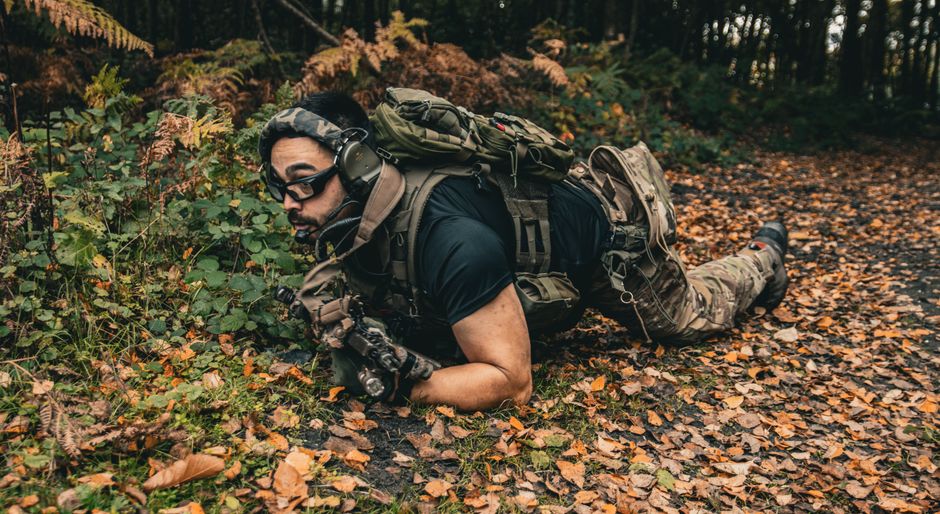
Nobody talks about this enough. GORUCK uses 1000D Cordura nylon. It’s bombproof. It’s also sandpaper for your clothing. After six months of daily carry, the lower back panel of my GR2 had worn visible pilling into three merino wool t-shirts. My Patagonia Better Sweater has a faded patch exactly where the bag rests.
This isn’t a defect. It’s the tradeoff for durability that borders on absurd. I’ve dragged this bag across concrete, shoved it into overhead bins with sharp edges, and once accidentally dropped it down a flight of stone steps in Dubrovnik. The bag looks used but has zero structural damage. The zippers—massive YKK #10s—still glide like the day I bought it.
If you wear delicate fabrics like cashmere or lightweight merino daily, this bag will destroy them over time. The solution: GORUCK now makes a 500D Cordura version in select colors. It’s noticeably smoother. You lose a tiny fraction of durability but save your $120 Icebreaker t-shirts. I wish I’d known this before buying the 1000D version.
Packing Strategy: The Built-In Field Pocket Changes Everything
Most backpacks are one giant cavity. You throw everything in, then dig around blindly at security checkpoints. The GR2 has a built-in field pocket—a separate compartment on the front with its own organization—and this single feature changes how you move through airports.
Here’s my exact system:
- Main compartment: Packing cubes only. One medium Eagle Creek cube for clothes, one small for underwear and socks. Nothing loose. Ever.
- Field pocket: Everything I need during transit. Passport, boarding pass, Kindle, charging cable, snacks, hand sanitizer, pen. All accessible without opening the main bag.
- Laptop compartment: 15″ MacBook Air in a thin sleeve, plus a Moleskine notebook. The false bottom means your laptop never hits the ground when you set the bag down.
- Top outer pocket: Sunglasses in a hard case, plus a small pouch with ibuprofen and bandaids.
At security, I open the laptop compartment only. Everything else stays zipped. In my seat, the field pocket faces me. I never need to stand up and wrestle with the overhead bin mid-flight. This system took me six trips to refine. Use it from day one.
The SCARS Warranty Is the Real Product

GORUCK’s SCARS warranty is not a marketing gimmick. It’s genuinely the best warranty I’ve encountered in any product category. They’ll repair any damage—zipper blowouts, torn fabric, broken buckles—for the life of the bag. You pay shipping to them. They fix it and ship it back free. If they can’t fix it, they replace it.
I know a photographer in Seattle who sent in a GR1 that had been chewed by a bear. A literal bear. GORUCK replaced the entire front panel and sent it back with a handwritten note saying “nice story.” This warranty alone justifies a significant portion of the price. A $400 bag that gets replaced for life costs less over ten years than three $150 bags that fall apart.
But there’s a catch: SCARS covers workmanship and materials, not normal wear. If you drag your bag behind a car (someone actually did this), that’s on you. The 1000D will outlast your interest in the bag anyway. I mention the warranty because it shifts the value calculation. You’re not buying a backpack. You’re buying a lifetime luggage solution.
When You Should Absolutely Not Buy a GR2
This bag is wrong for a lot of people. It’s heavy. The 26L weighs 4.5 pounds empty. A similar-capacity Osprey Daylite Plus weighs 1.2 pounds. If you’re counting grams for ultralight hiking or you have back issues, stop reading. Buy something from Osprey or the Matador Freerain28 instead.
It’s also aggressively tactical-looking. In Tokyo or Copenhagen, it blends in fine. In rural Thailand or a nice restaurant in Paris, you’ll stand out. The MOLLE webbing on the front screams “military” to some people. If you want a bag that looks professional in a boardroom, get the Aer Travel Pack 3 ($249) or the Evergoods CPL24 ($299). Both have similar organization with a cleaner aesthetic.
The GR2 makes zero sense if:
- You travel primarily for business and need a sleek profile
- You’re an ultralight backpacker counting every ounce
- You only take weekend trips and don’t need a “lifetime” bag
- You’re under 5’5″ — the 26L will still feel large on smaller frames
For those people, the Aer Travel Pack 3 in X-Pac is a better choice. Half the weight, sleeker look, still excellent organization.
Real Travel Testing: 14 Countries in 3 Years
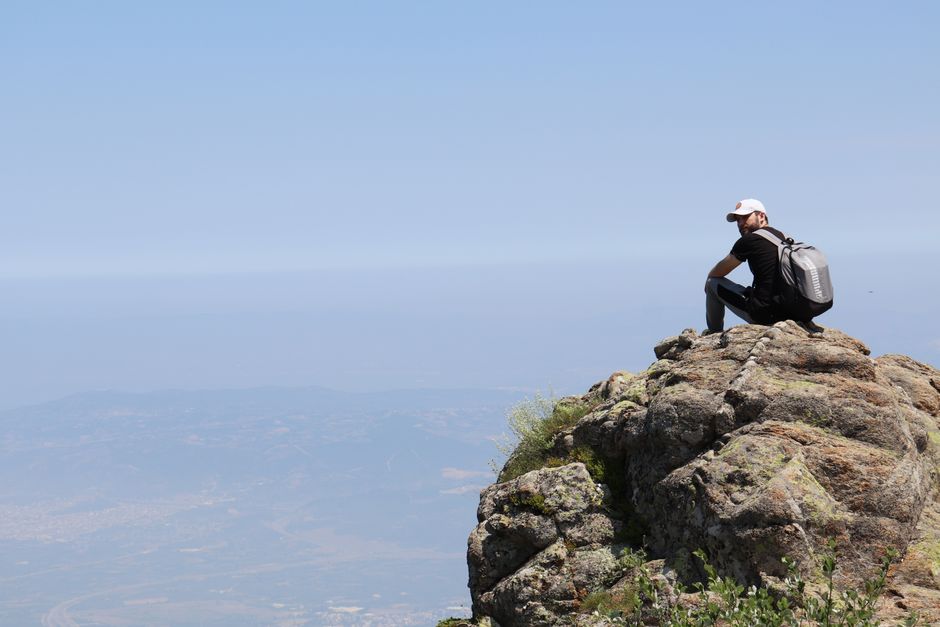
I’ve put this bag through conditions most luggage never sees. Here are the moments that revealed what it’s actually made of:
Monsoon season in Hoi An, Vietnam: 45 minutes of walking through sideways rain. The YKK AquaGuard zippers kept the main compartment completely dry. The outer pocket got slightly damp at the seams. My laptop was untouched. I didn’t use a rain cover.
Overnight bus from Bangkok to Chiang Mai: Wedged under the seat in front of me for 10 hours. Got kicked, spilled on, and compressed. The bag’s structure held. Everything inside was exactly where I packed it. The frame sheet prevented the dreaded “potato sack” collapse that cheaper bags suffer.
Carry-on roulette on Ryanair: The 26L fits in the Ryanair sizer if you don’t overstuff the main compartment. I’ve been challenged twice. Both times it squeezed in. The 34L will not pass. If you fly European budget airlines frequently, the 26L is your only safe GR2 option.
Hiking the Dolomites: The GR2 is not a hiking backpack. The straps are comfortable but lack load lifters. After 6 hours with 20 pounds, my shoulders were tired. A proper hiking pack like the Osprey Stratos would have been better. The GR2 works for day hikes under 3 hours. Beyond that, use actual hiking gear.
Is It Worth $400+ in 2026?
Yes, for a specific person. Not for everyone.
The GR2 is worth the money if you travel internationally at least 4-6 times per year and plan to keep the same bag for a decade. The math is simple: $400 divided by 10 years is $40 per year. That’s less than most people spend on checked bag fees annually. Add in the SCARS warranty and the bag potentially outlasts you.
It’s not worth it if you travel once or twice yearly, prefer soft-sided luggage, or don’t want to think about packing strategy. Buy a Cotopaxi Allpa 35L ($200) or a Patagonia Black Hole Mini MLC 30L ($199) instead. Both are excellent bags at half the price.
After three years and roughly 40 flights, my GR2 26L has cost me about $10 per trip. The zippers are perfect. The fabric has character but no damage. The organization still makes me smile at security checkpoints. For the right traveler, it’s not an expensive bag. It’s a cheap one spread over time.