Taipei is the safest overall choice for a comfortable April night market walk, with Hoi An close behind for travelers who want lanterns, riverside air, and a drier evening. Bangkok can work, but April heat and Songkran crowds change the experience. Penang offers excellent food, though its humidity feels heavier after sunset.
Which Asian night markets feel best in April?
April is not one climate across Asia. Taipei usually gives you mild evenings with a real chance of rain. Hoi An tends to offer warm, clearer nights. Bangkok stays hot after dark, while Penang combines heat with high humidity. The right market depends less on fame than on the temperature at 8 PM, how much open pavement you must cross, and whether rain has somewhere to go.
| Market | Typical April evening | Best visiting window | Main drawback | Verdict |
|---|---|---|---|---|
| Raohe, Taipei | Low-20s Celsius; occasional rain | 6:30–9:30 PM | Wet weather and dense crowds | Best all-rounder |
| Hoi An Night Market | Warm, often clear; around the mid-20s Celsius after dark | 7:30–9:30 PM | Tourist-heavy central lanes | Best for atmosphere |
| Saphan Phut, Bangkok | Hot, often near the upper-20s Celsius | 8:00–10:30 PM | Heat, traffic, and April festivals | Best for late-night energy |
| Taman Connaught, Kuala Lumpur | Warm and humid with shower risk | 7:00–10:30 PM on Wednesday | Long walk and sudden rain | Best for serious grazing |
These are practical comfort comparisons, not promises about a specific forecast. For fixed details, check the official Taipei listing for Raohe, the Tourism Authority of Thailand listing for Saphan Phut, and the Malaysia tourism guide for Taman Connaught before leaving your hotel.
Taipei wins for the most reliable evening walk
Taipei is my clear recommendation for travelers who want street food without fighting tropical heat. April evenings usually sit in the low twenties Celsius, so you can walk, queue, and eat without planning your whole night around air-conditioning. Raohe Street Tourist Night Market gives you a compact route of roughly 600 meters, and the official Taipei listing shows daily opening hours from 5 PM to midnight. That compact layout matters: you can see the temple gate, try a pepper bun, compare several food stalls, and reach Songshan Station without committing to a three-hour trek.
The trade-off is rain. Taipei can produce a damp evening even when the afternoon looked bright, and umbrellas make narrow lanes feel tighter. Go between 6:30 and 8 PM for the best balance of stall availability and manageable crowds. Use an EasyCard for the metro, keep a small towel in your day bag, and choose Raohe over the larger Shilin market if comfort matters more than sheer size. For an easy April night with the fewest weather compromises, Raohe is the winner.
Why Hoi An beats hotter cities after 7 PM
Hoi An gives you the best atmosphere-to-effort ratio
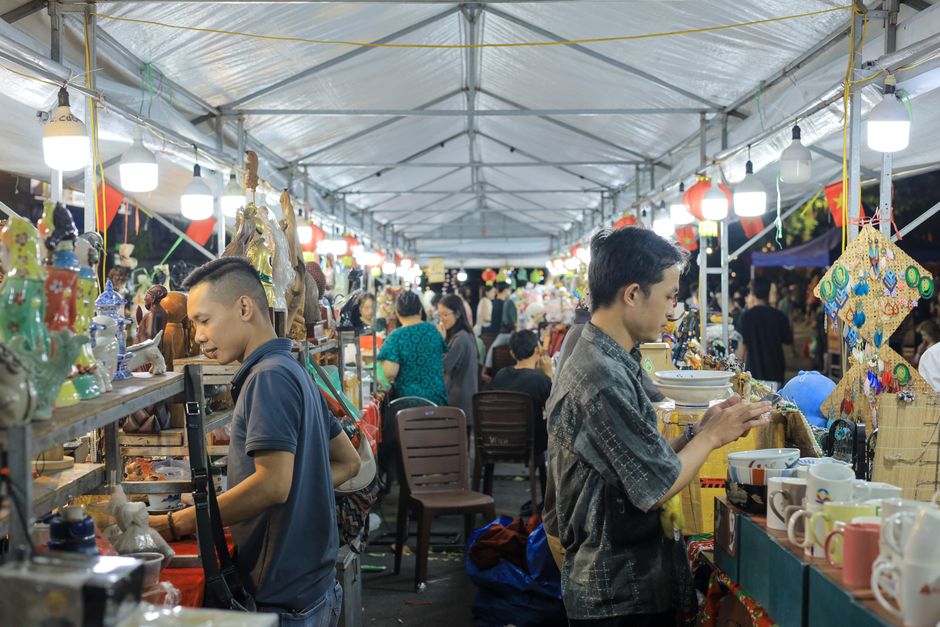
Hoi An works because its main evening experience stays concentrated around the old town and the Thu Bon River. You do not need to cross a huge open market to find food, lanterns, small shops, and riverside views. April is one of the stronger months for central Vietnam: tourism data places Hoi An around 33°C in the daytime and about 24°C at night, with roughly four rainy days in the month. That does not guarantee a cool evening, but it gives Hoi An a better comfort profile than Bangkok for a traveler who wants to linger outdoors.
Arrive before full darkness, walk the old town first, then move toward the lantern market after 7:30 PM. Cao lầu commonly costs about VND40,000–70,000, while a banh mi often costs VND20,000–40,000. Prices vary by stall, and the busiest lanes near the river can feel packed even when the air feels pleasant. Hoi An is my pick for couples, photographers, and first-time visitors who want a visually memorable night with limited planning.
Penang is better for food than for cool air
George Town and the Batu Ferringhi area offer stronger food credentials than Hoi An, but the comfort equation changes. April evenings remain warm and humid, and a short shower can turn an easy walk into a sticky search for shelter. Char kway teow, satay, and cendol make the trade worthwhile for serious eaters. A plate of char kway teow often falls around RM8–15 at a hawker center. Choose Penang when the food itself is the main event, not when you want a relaxed, long stroll.
Bangkok needs a late start and a festival check
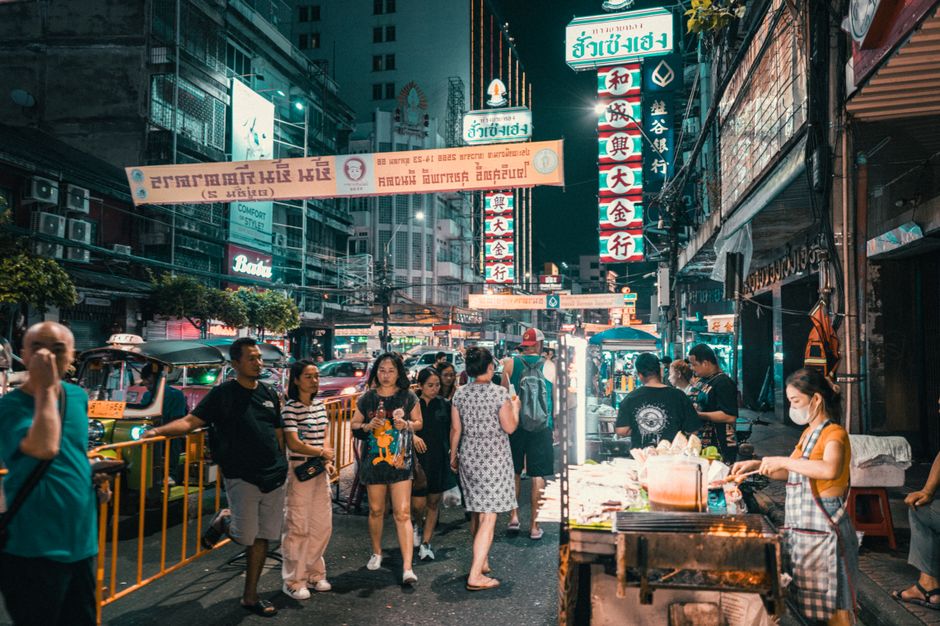
Bangkok can still be excellent after dark, especially around Saphan Phut, where the official tourism listing describes stalls opening from 8 PM until 1 AM on Tuesday through Sunday. The river setting gives parts of the route more air than an inland shopping street, but the city remains hot. April also brings Songkran. In 2026, the national holiday runs from April 13 to 15, with related events often starting earlier or continuing later. During those dates, streets can become wet, noisy, and difficult to cross. Choose Bangkok for late-night energy and food variety; choose Hoi An or Taipei for comfort.
How to plan a comfortable April market night
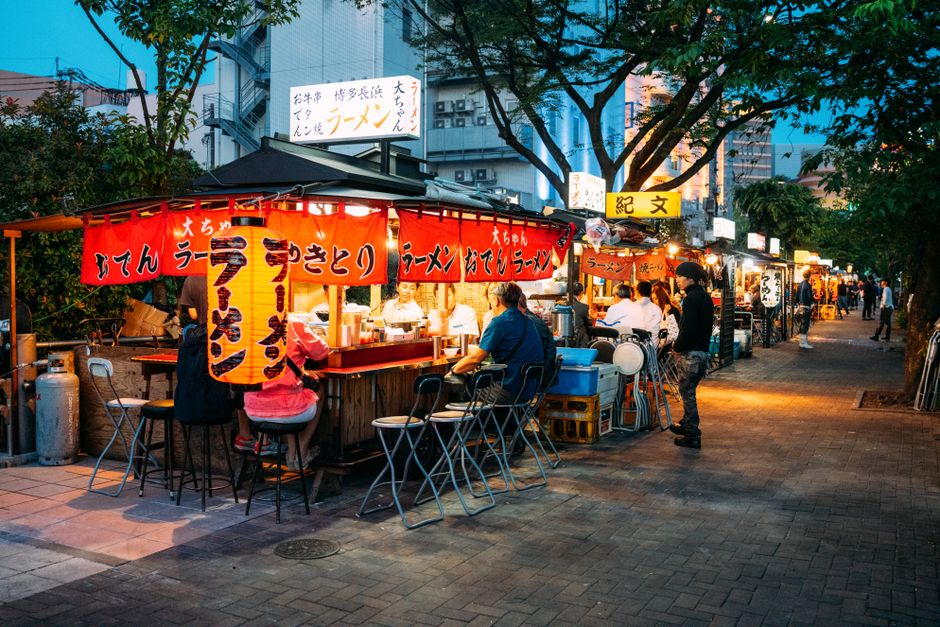
- Check the 8 PM forecast, not just the daytime high. A city that reaches 32°C at noon may feel fine at 9 PM, while humidity can keep another city uncomfortable long after sunset. Look at temperature, rain probability, and wind together.
- Pick a market with a short, clear route. Raohe works well because one main street connects the food stalls with public transport. Hoi An works because the old town, river, and market sit close together. Large markets can offer more variety but demand more walking.
- Match the market to the weekday. Taman Connaught operates on Wednesday, and Saphan Phut runs Tuesday through Sunday. Never build an evening around a market without checking its current operating day.
- Arrive before the peak queue. Reach Taipei or Hoi An around 6:30–7:30 PM, then eat the most popular dish before the main crowd arrives. For Bangkok, starting around 8 PM makes more sense because some stalls open later.
- Carry cash, water, and rain protection. Small vendors may not accept cards, and a compact poncho works better than a large umbrella in crowded lanes. A refillable bottle also reduces the temptation to buy an expensive drink at every stop.
- Plan the exit before the last snack. Check the final metro, train, or ferry time in Google Maps. In Bangkok, use Grab only after checking the pickup point; traffic can make a short-looking route slow. In Taipei, an EasyCard makes the metro exit simple, but it does not solve a market closure or a delayed train.
The most common mistake is treating every night market as a spontaneous two-hour wander. April weather rewards a tighter plan: one market, one nearby landmark, one clear route home. Skip an exposed market if thunderstorms are moving in, and skip Bangkok’s main festival zones if you want a dry dinner rather than a water fight.
Which April night market should you choose?
Is April too hot for Bangkok night markets?
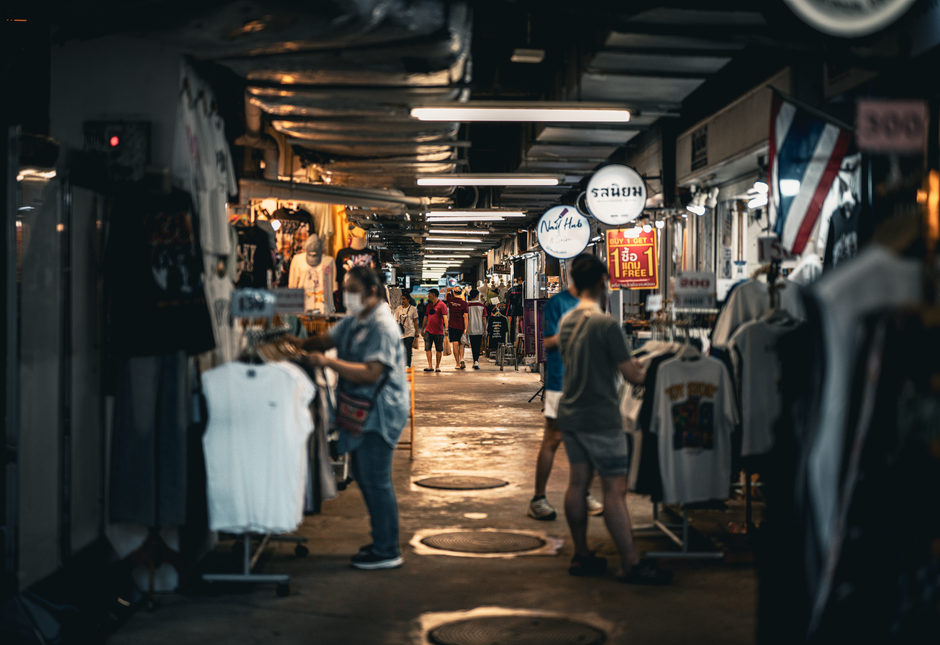
It is too hot for some travelers, but not for everyone. Bangkok works if you start late, choose a market with food and seating, and avoid the hottest festival streets. Saphan Phut is the better choice for a market-focused evening because its operating hours run late and its riverside location gives the walk a stronger sense of place. If you dislike humidity or sweat, Taipei is the better answer.
Which market is best if rain would ruin the evening?
Choose Taipei, but build in flexibility. Raohe operates rain or shine more reliably than a temporary outdoor bazaar, and the surrounding transport makes it easy to leave. Hoi An is the second-best option when the forecast looks stable. Penang and Bangkok can still work in rain, but humidity, traffic, and slippery pavement make the experience less comfortable.
Should you choose Hoi An or Taipei?
Choose Hoi An for lanterns, warm nights, and a compact old-town setting. Choose Taipei for better public transport, more food variety, and the strongest chance of comfortable walking temperatures. For a first trip focused on ease, Taipei wins. For a romantic or highly visual evening, Hoi An wins.
When should you avoid April night markets?
Avoid Bangkok during the busiest Songkran dates if you do not want to get soaked, and avoid any open-air market when lightning or heavy rain is forecast. Do not force a market visit into the middle of a packed sightseeing day either; heat exhaustion turns good food into a chore. My final pick is Raohe in Taipei for the most dependable April experience, with Hoi An Night Market as the better choice when atmosphere matters more than transport convenience.