The number that surprises most first-time road trippers: fuel is rarely the biggest line item. Accommodation usually is — and it’s the expense most people never plan for until they’re already two days in, staring at a $180 motel sign somewhere off I-40.
The travelers who pull off genuinely cheap road trips don’t just drive less or skip restaurants. They make specific decisions before leaving home that eliminate the three or four costs that quietly consume 60% of a typical road trip budget. Here’s what that actually looks like.
What a Road Trip Actually Costs: A Realistic Daily Breakdown
Before picking a route, run the real numbers. Most budget estimates ignore half the costs. Here’s what two people should realistically plan per day across three trip styles:
| Cost Category | Budget Trip (camping) | Mid-Range (mixed) | Comfort Trip (motels) |
|---|---|---|---|
| Fuel (avg 300 miles/day, 30mpg, $3.50/gal) | $35–45 | $35–45 | $35–45 |
| Accommodation (per night, split two ways) | $0–20 | $25–50 | $60–100 |
| Food (groceries vs. eating out) | $20–30 | $35–50 | $50–80 |
| Activities and entry fees | $5–10 | $10–20 | $20–40 |
| Total per day for two people | $60–95 | $105–165 | $165–265 |
The gap between a $65/day trip and a $200/day trip is almost entirely accommodation and food. Fuel is essentially fixed once you’ve chosen your route and vehicle.
The Annual Pass Math
If your route touches any US National Parks or federal lands — and most good road trip routes do — buy the America the Beautiful Annual Pass for $80 before you leave. It covers all national parks, national forests, and Bureau of Land Management day-use sites for 12 months. Two entries to Grand Canyon alone ($35 each) already justify the purchase. Most road trip routes through the West hit four to eight fee sites.
Vehicle Efficiency Matters More Than You Think
At $3.50/gallon, the difference between a 20mpg SUV and a 35mpg sedan over 3,000 miles is $225. If you own both, take the efficient one. Renting? A compact at $40/day plus lower fuel costs beats an SUV at $75/day plus an extra $150 in gas over a week-long trip.
Five Road Trip Routes That Consistently Come in Under $90/Day for Two
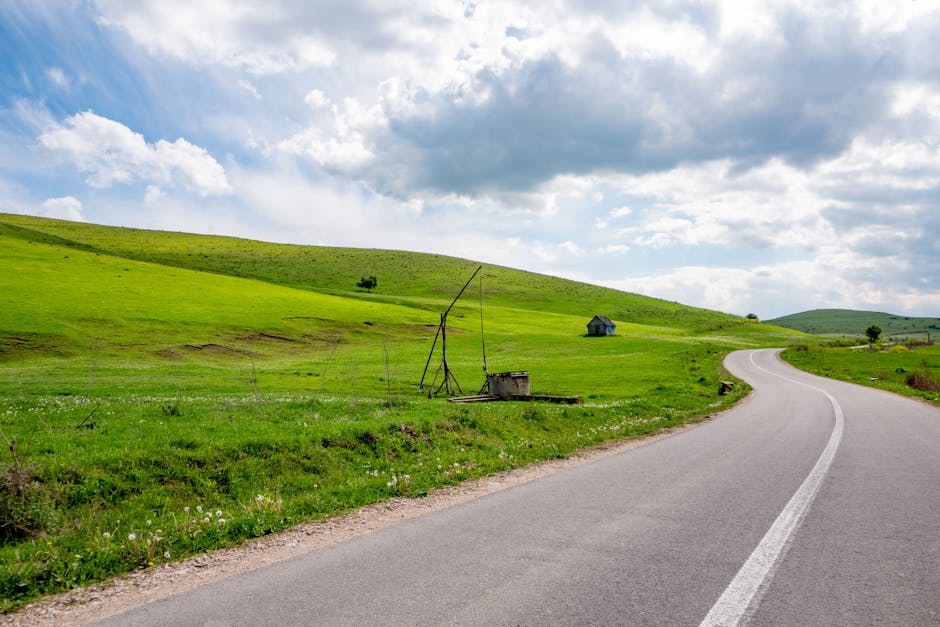
Route choice determines your costs more than almost any other single decision. Some regions are expensive by structure — limited free camping, expensive food deserts, unavoidable park fees stacked on each other. Others are naturally budget-friendly. These five routes consistently deliver.
Blue Ridge Parkway: Virginia to North Carolina
469 miles of free, no-traffic scenic highway maintained by the National Park Service. Zero entrance fee. Campgrounds at Otter Creek, Linville Falls, and Mount Pisgah run $20/night on a first-come, first-served basis. The surrounding towns — Floyd, VA; Brevard, NC; Boone, NC — have farmers markets and independent diners where $12 covers a full plate. Budget: $55–75/day for two on a 5-day drive. One practical note: the parkway closes sections in winter and after heavy rain. Check road status at nps.gov/blri before committing to dates.
Olympic Peninsula Loop: Washington State
About 330 miles of continuous loop through old-growth rainforest, wild Pacific beaches, and the Sol Duc hot springs. The America the Beautiful Pass handles the $30 park entry fee. Free dispersed camping is available on Olympic National Forest land just outside park boundaries — the Avenza Maps app with the Olympic National Forest map layer shows legal spots with GPS accuracy. Sequim, on the east side of the peninsula, is one of the cheapest towns in the Pacific Northwest for restocking groceries. Budget: $60–85/day for two.
Texas Hill Country Circuit
Start and end in Austin or San Antonio. Loop through Fredericksburg, Kerrville, Vanderpool, and Leakey. The driving distances are short — the full loop takes four to five days with plenty of stops. Texas state parks charge $7–8 per person per night with solid facilities throughout. Enchanted Rock State Natural Area ($8/person day use) is one of the best granite dome hikes in the country. Fredericksburg runs expensive due to tourist traffic, but most stops along FM 337 and TX-83 are not. Budget: $50–70/day for two.
Ozark Highlands: Arkansas and Missouri
Severely underrated. Buffalo National River, Ozark National Forest, and dozens of clear spring-fed swimming holes cost almost nothing to access. The Ozark Highlands Trail offers free camping along its 218-mile length. Eureka Springs, AR is the obvious tourist destination — worth passing through, not worth centering your itinerary around. The rest of the region runs genuinely cheap, and fuel costs stay low because the distance between attractions is short. Budget: $45–65/day for two — consistently the lowest in the continental US.
Pacific Coast Highway: San Luis Obispo to Crescent City
The full PCH sounds romantic, but the expensive sections bracket both ends — anything within 60 miles of Los Angeles or San Francisco is brutal for accommodation. The stretch from San Luis Obispo north through Big Sur, then continuing north of the Bay Area through the Lost Coast, Humboldt Redwoods, and up to Crescent City is where the value actually lives. Plaskett Creek Campground in Big Sur costs $30/night. Humboldt Redwoods State Park campgrounds run $35/night. Crescent City has $60 motels walking distance from the harbor. Budget: $70–100/day for two, higher if you’re camping in Big Sur on summer weekends when reservations fill months in advance.
Where to Sleep Without Paying Motel Prices
Accommodation is the lever that actually moves the needle. Here are the real options, ranked by cost:
- Bureau of Land Management (BLM) dispersed camping — free. Legal, unmanaged camping on most BLM land in the western US. No facilities. The BLM map at blm.gov shows which areas permit dispersed camping. The iOverlander app has community-tagged free spots across North America, each with recent reviews and GPS coordinates.
- National Forest dispersed camping — free. Same principle, different land manager. Legal for stays under 14 consecutive days in most areas. Covers hundreds of millions of acres, particularly across the West and Southeast.
- Harvest Hosts — $99/year membership. Overnight parking at wineries, farms, breweries, and museums that open their property to travelers. No hookups, so you need a self-contained setup — even a flat-folding rear seat works. Over 5,000 locations across North America. One of the most underused road trip resources available.
- Walmart and Cracker Barrel parking lots — free. Both chains have informal overnight parking policies. Cracker Barrel is explicit about it on their website. Not every location allows it — call the specific store ahead of time to confirm.
- Hipcamp — $15–40/night. Private landowners renting camping spots on their property. Often more scenic than public campgrounds, with better maintained facilities. Book through the Hipcamp app, which shows availability and reviews.
- KOA campgrounds — $30–55/night. Consistent quality, always have showers and laundry, usually bookable same-day. More expensive than public campgrounds but far cheaper than motels. The KOA Value Kard membership ($30/year) gets 10% off every stay.
- State park campgrounds — $15–35/night. The sweet spot for most road trippers. Better maintained than BLM, cheaper than private sites. Reserve in advance for summer weekends — California, Colorado, and Washington state parks fill six months out.
The Budget Leaks That Quietly Derail Most Road Trips
Four expenses consistently blow road trip budgets — not because they’re unavoidable, but because most people don’t plan for them.
Highway food stops
A single interstate gas station stop — two sandwiches, two drinks, a bag of chips — runs $25–35 easily. Do that twice a day for ten days and you’ve added $500–700 to your budget before touching a restaurant. The fix is mechanical: stop at a grocery store every two to three days. A Coleman 48-quart cooler ($45 at Walmart) keeps food cold for 48+ hours. Build meals around things that travel well — peanut butter, wraps, hard cheese, bananas, hard-boiled eggs, canned beans. Daily food costs drop from $80 to around $25 almost immediately.
Underestimating what driving far per day costs you
More miles means more fuel, obviously. The less obvious problem: driving 400+ miles per day means you’re spending your trip in the car rather than at your destination. The road trippers who get the most out of a tight budget consistently drive 150–250 miles per day — enough to cover meaningful ground, short enough to keep fuel from dominating the daily total. Slow down. The route is cheaper and better.
Toll roads without a plan
Texas, Florida, and the Northeast corridor have extensive toll systems. A week in Florida without a SunPass can cost $40–60 in cash tolls, or up to $100+ in invoice fees if you pass through toll-by-plate systems without payment. Before any trip through toll-heavy states, check your route on Google Maps, which highlights toll roads in orange. E-ZPass covers 19 states and pays for itself within two days of driving in New England or New York.
Skipping campsite reservations over holiday weekends
Free dispersed camping requires flexibility. Over Memorial Day, Fourth of July, or Labor Day weekends, good free spots near popular areas fill by Thursday night. The travelers who end up paying $180 for a motel on a Friday in July are almost always the ones who counted on free camping with no backup. Book at least one guaranteed campsite for every holiday weekend night — you can cancel it if you find something free, but you can’t create a site that doesn’t exist.
Fuel: One Clear Verdict
GasBuddy consistently finds stations $0.15–0.30 cheaper per gallon than the nearest competitor. Over a 3,000-mile trip, that saves $20–40 — not dramatic, but real money. Costco gas stations typically beat nearby competitors by $0.20–0.40/gallon, which means the $65/year Costco membership pays for itself on a single long trip if you pass one every two to three days.
Fill up in mid-size towns at independent stations, not at highway rest stops or rural single-station towns. Isolated rural stations in Nevada, Wyoming, or West Texas can run $0.50–0.80 above the state average — these are the fills that quietly blow fuel budgets. Plan your stops the night before using GasBuddy’s map view rather than reacting when the gauge hits empty near an on-ramp.
When Driving Is Actually the More Expensive Choice
Road trips stop being the cheap option at roughly 1,200 miles solo or 1,800 miles for two people. Beyond those distances, the math shifts. At 30mpg and $3.50/gallon, driving 2,000 miles costs $233 in fuel alone — plus two or three nights of accommodation during the drive itself. A budget airline ticket on the same route frequently costs $80–150. The driving time is also real time that could be spent at the destination rather than behind the wheel.
Driving makes financial sense when:
- The drive itself is the destination — scenic byways, national parks, multiple stops you actually want to experience
- You’re hauling gear (camping equipment, bikes, kayaks, surfboards) that would cost more to rent than to transport
- There are multiple stops that no single airport serves conveniently
- You’re traveling with three or more people, where per-person costs drop significantly compared to separate flights
If you’re driving straight through to reach one destination that has a nearby airport, check flights first. The road trip mythology that driving always beats flying doesn’t hold up past a certain distance — and pretending otherwise just makes the trip more expensive.
For a first genuinely cheap road trip, the Ozark Highlands circuit in Arkansas and Missouri offers the lowest consistent daily costs in the continental US, minimal competition for campsites even on weekends, and scenery that most travelers completely overlook. Start there before committing to the PCH or Yellowstone corridor — both doable cheaply, but both require more lead time on reservations and more tolerance for crowds.